
Hello, I am Frank’s assistant, Scout. (Think that Scout is a strange name? So did the little girl in To Kill A Mockingbird but somehow it worked out pretty well for her.)
As Frank’s assistant, I help around the office in Marietta, keeping track of all the paperwork associated with building a domicile, especially a log cabin. He has asked me to give you a behind the scenes look at some details involved in the Erywilde project.
I will enumerate the items as they are easier to reference (even though my college English professor hated the process of adding clarity to my writing. Go figure. I guess that’s why he was still a professor.)
1. “Yellow Pine”. This label generally refers to the subgenus Pinus, subsection Australes Loudon. (I never took cat naps during my taxonomy class!)
In the South, there are lots of pine trees. Lots and lots of them. I would climb them but they are extremely tall with a long way between the ground and the first branch. Although difficult to climb, these characteristics make them great for logs for the cabin. Long, straight, with few branches on the lower trunk.
There are four common species of pine grouped into the Yellow Pine category
a. Short leaf
b. Loblolly
c. Slash and
d. Long leaf.
Most common in the part of the state where the property is located is Loblolly. They have moderately long needles and their pine cones “bite you” (they have sharp little hooks on them).
The long leaf is a very neat pine. Highly resistant to fire, forests of it were developed by the Southern property owners years ago. They would burn the underbrush, leaving the pines unaffected. This burned environment, as it renewed itself, was a great place for quail which they then hunted.
It actually has a “grass stage”, the first four or five years of its life. In this stage, still resistant to fire, it looks like a clump of grass. Later a shoot emerges and develops into the adult long leaf. These trees grow much further south in Georgia.
The slash and short needle pine are less common in the cabin’s area but generally are fast growing and the larger ones are used for dimensioned (cut into dimensions like 2″x4″s) lumber.
If old enough, they all grow big enough for a 40′ x 40′ cabin, the size Frank is now discussing. The key phrase, is “if old enough”. Most of them aren’t old.
2. Fauna
Obviously, as you may have read in the earlier blog “Ever shot an armadillo?” there are armadillos on the property. They dig. A lot. There are small dig marks all over the field. Frank says they are digging for grubs which is alright with him. He plans on using bacillus thuringiensis or BT to organically control the grubs. (For more info, visit http://www.planetnatural.com/site/xdpy/kb/natural-pest-control-bt.html ).
Next, there are white tailed deer (Odocoileus virginianus). I hear that there are deer hunters everywhere so I guess there must be deer everywhere too.
Coyotes (canis latrans). Packs of coyotes. I guess they hunt the deer, attack sheep, cattle, raccoons, possums, dogs and cats. Coyotes are why Frank has not taken me to the farm yet. I suppose that coyotes and man are currently the two predators of deer (replacing the wolf I think.) Farmers put mules (they aren’t afraid of the coyotes and can kick the tar out of them) and llamas (I guess they spit on the coyotes) in the fields with their cattle and sheep to be sort of body guards. Coyotes do not eat armadillos.
Snakes, turtles, newts, frogs, etc. surely exist but I have not seen any specimens back here at the office so I can’t address them further.
Frank reports seeing a Green Heron, coot, vultures, hawks, mockingbirds, sparrows, etc. and has heard, but not seen, woodpeckers and owls.
Fish – only reports of catfish. No one has fished the pond yet so we will report later on additional finds.
3. Dirt
Most people would think “Georgia” and immediately, “red clay”. I spoke with a very knowledgeable man at a local lumber company and he showed me how to use the computer to use all sorts of powerful, interactive web based tools. One site I visited produced a customized, 18 page report about the soil of Erywilde.
It is Davidson loam. To quote the article regarding vegetation, “Cleared areas are used for small grain, corn, cotton, soybeans, grain sorghum, hay, and pasture. The original forest consisted of white oak, red oak, post oak, hickory, yellow-poplar, and cedar; reforested areas are in shortleaf and loblolly pine. ” That pretty well describes Erywilde.
4. The name Erywilde
Personally, I think it is made up (but don’t tell anyone).
5. Blueprints
Although I guess they could be blue, I haven’t seen any blue ones. The ones I study are white paper with black ink. My sets have five different blueprints for the same structure as follows:
a. Elevation
b. Electrical Plan
c. Floor Plan
d. Foundation and Framing Plan
e. General Notes and Design Criteria
Lots of building code issues. Maybe I’ll address them later but I am getting tired now (and bored) so …
The END.
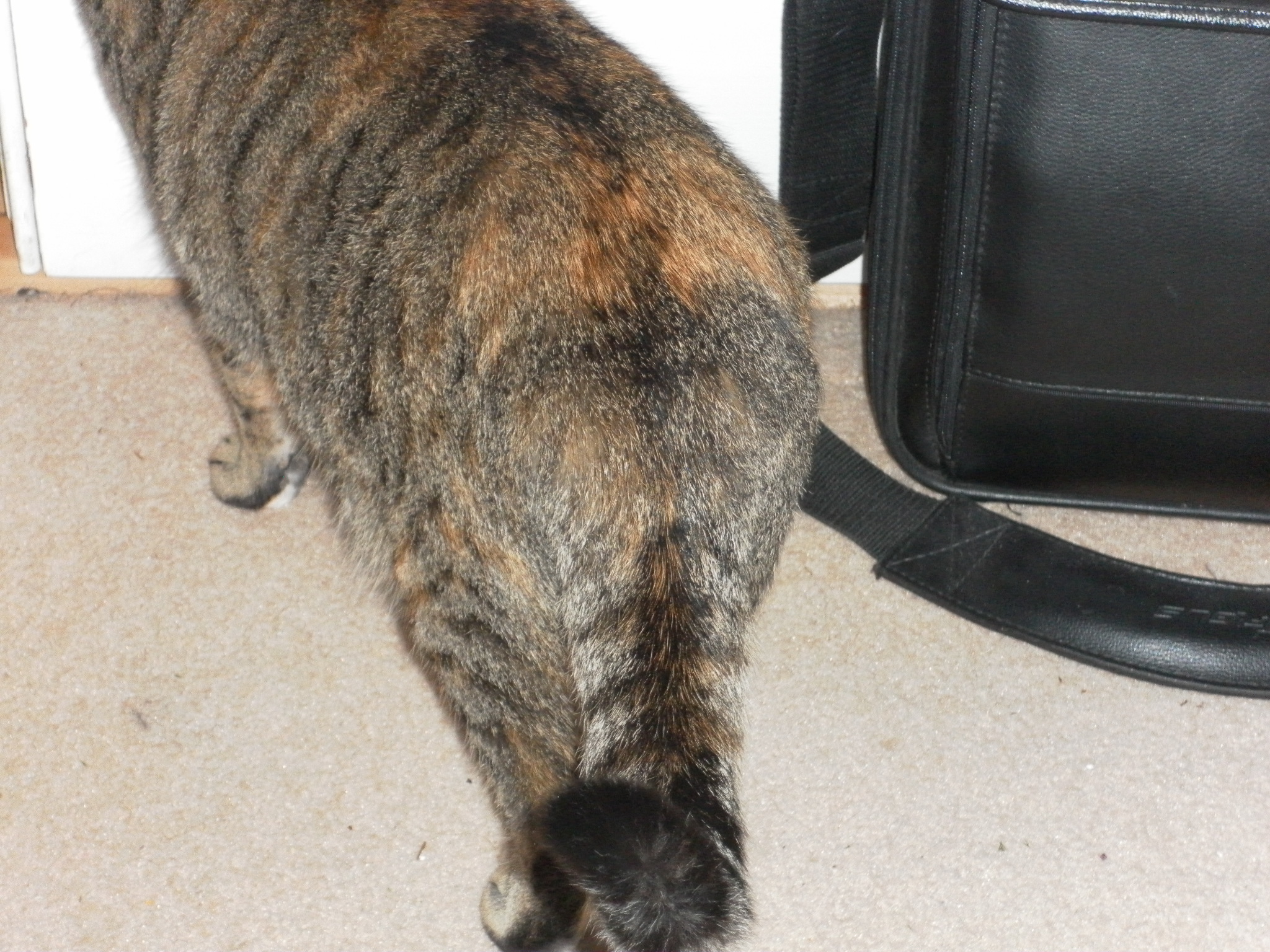
Scout leaves the house
Scout
ps – I’ve included some pictures.
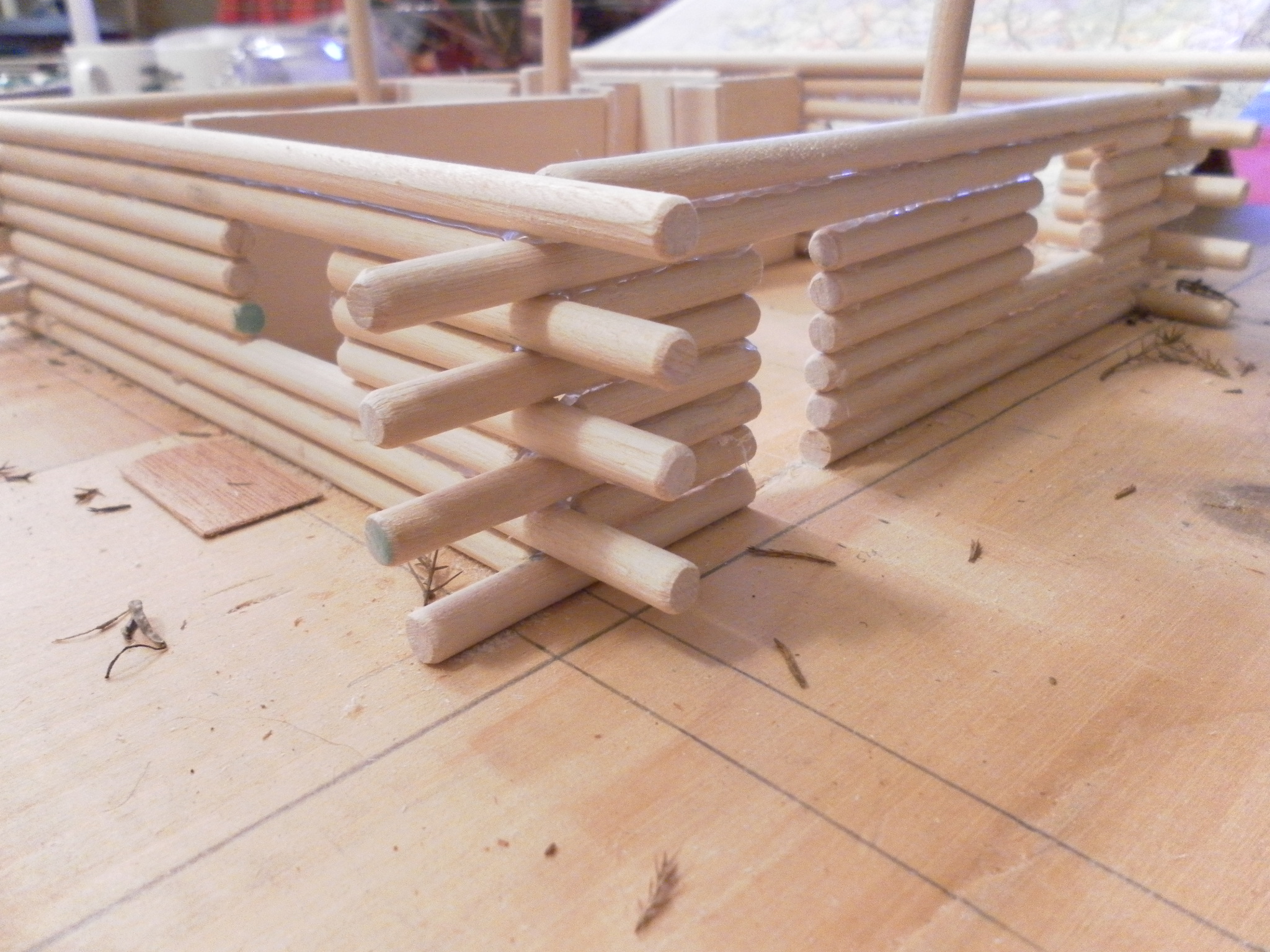
Model of Cabin I built showing end detail and back door
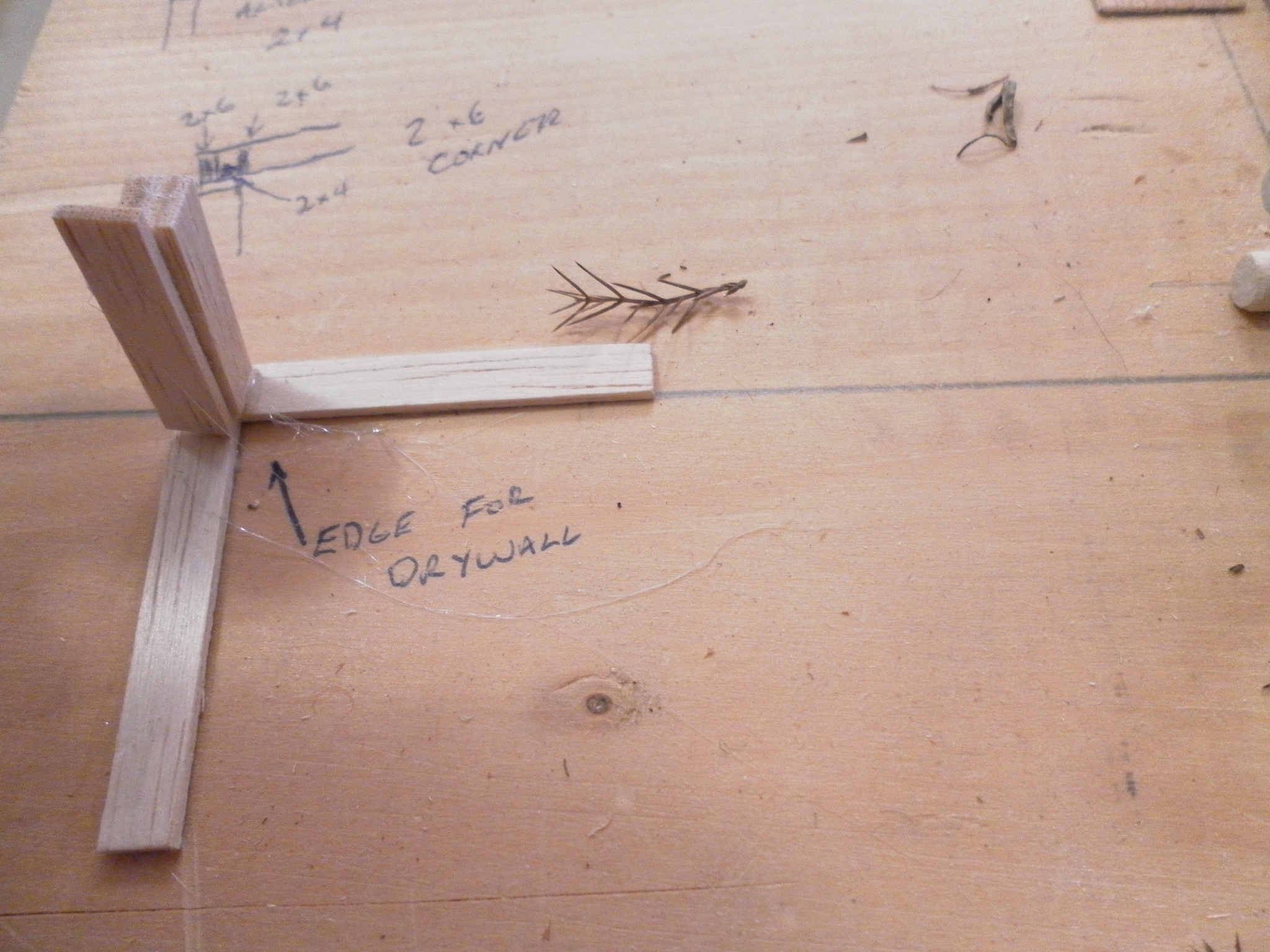
This shows the detail of how to build a strong corner out of 2″x4″ with space on which to nail the sheetrock.
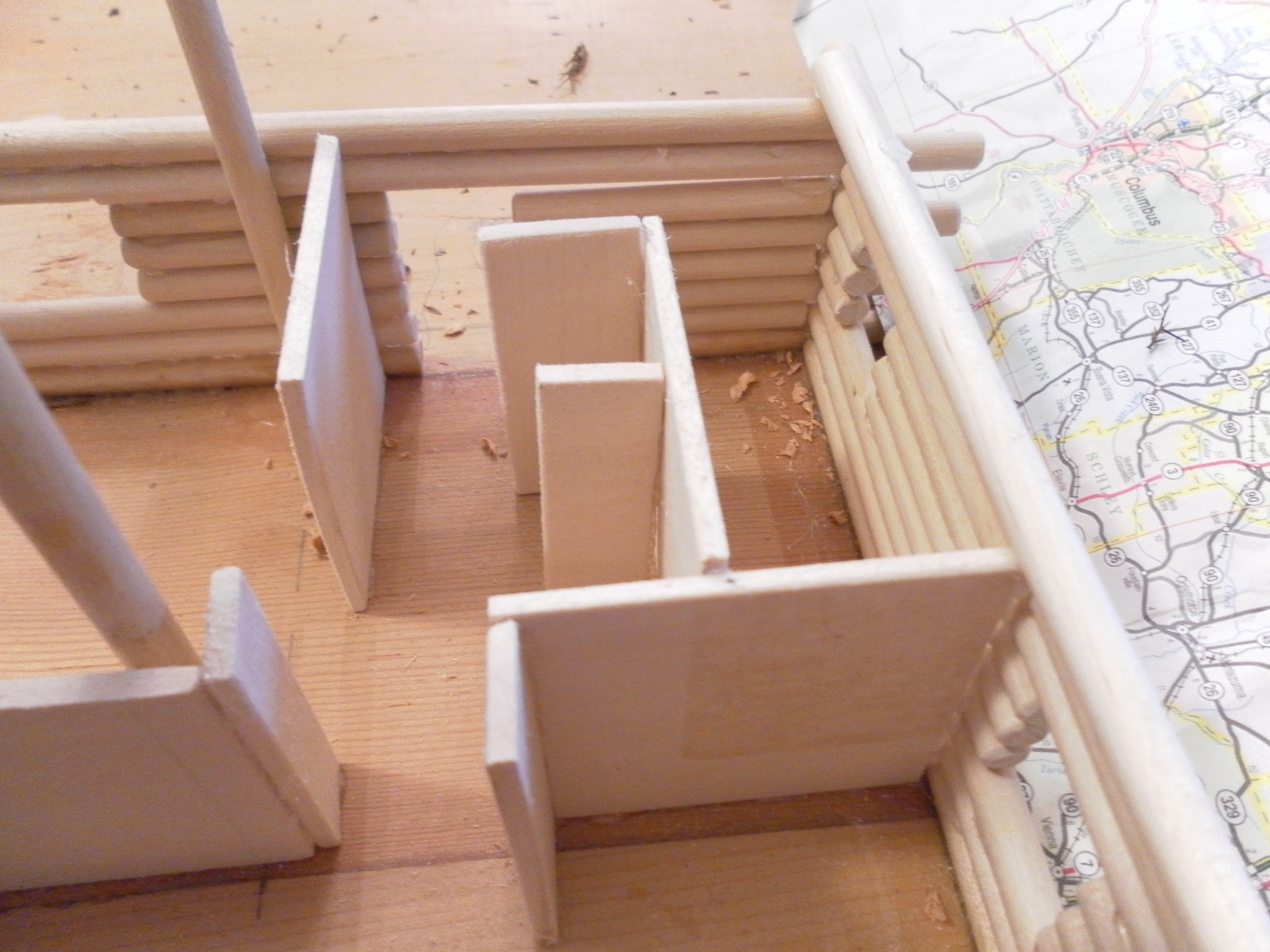 This shows the hallway and “wet wall”. The wet wall is the wall where the plumbing is located. It normally has back to back bathrooms, kitchen, etc. located on either side of the wall.
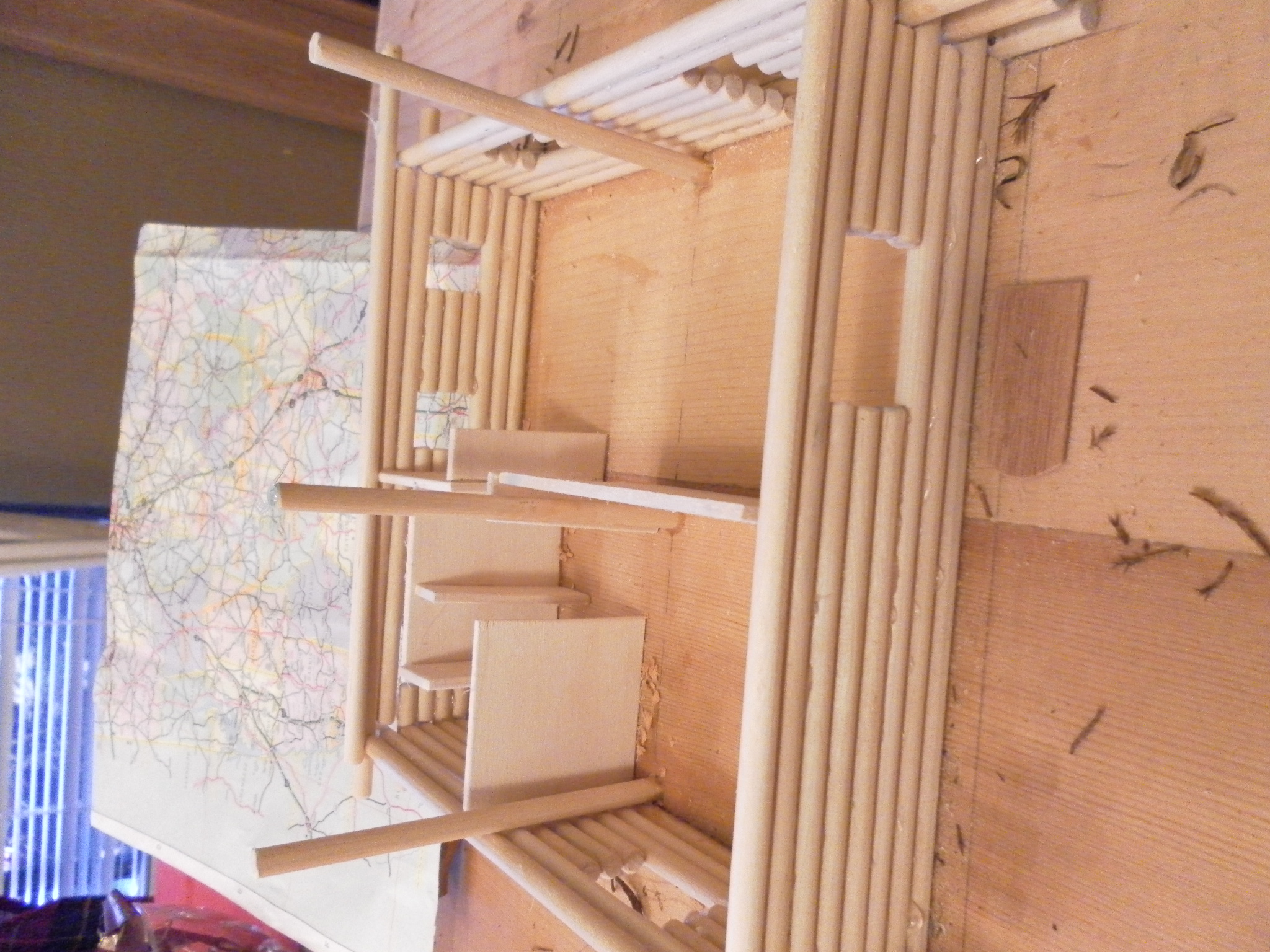
Here is an important detail. The three vertical logs are called Ridge Pole Support Logs and they hold up the, you guessed it, Ridge Pole. Adds an interesting vertical component to the logs, don’t you think?

Checking model against the blue prints.

I love my work. Very intellectual.

I stand by (on?) my work.


 Erywilde